
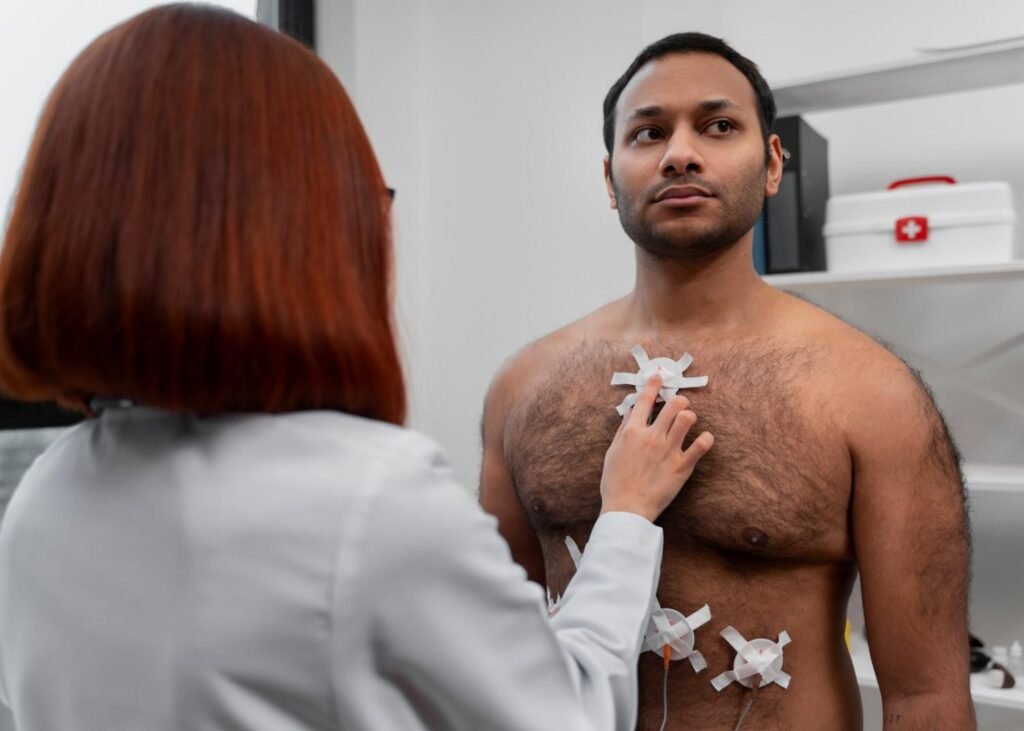
For many men, noticing extra fullness around the chest can raise an immediate question: Is it body fat, or is something else happening? The answer is not always obvious from appearance alone.
Gynaecomastia is one of the reasons a man’s chest may become enlarged. It involves an increase in male breast gland tissue and can occur on one or both sides. The change may be subtle, or it may become noticeable enough to affect clothing choices and body confidence.
The good news is that male breast enlargement does not automatically mean there is a serious health problem. At the same time, a new or persistent change should not simply be dismissed as weight gain. Understanding what is happening is the first step towards deciding whether any treatment is needed.
For more information, direct chat with us on WhatsApp.
Gynaecomastia Is Not Simply “Male Breasts”
One common misunderstanding is that every enlarged male chest is gynaecomastia.
There is an important difference between breast gland enlargement and an increase in fat around the chest. When excess fat is responsible for the appearance, it is sometimes referred to as pseudogynaecomastia. A person can also have both excess fat and enlarged breast tissue at the same time.
This distinction matters because losing weight may help when fat is the main contributor, while established glandular tissue may require a different approach.
Why Can a Man Develop Gynaecomastia?
There isn’t one single explanation for every case. In many situations, the underlying issue is a change in the relationship between testosterone and oestrogen.
Men naturally have both hormones. When the balance between them changes, breast tissue can respond by becoming larger. This can happen naturally at certain stages of life, particularly during puberty and with ageing.
Other possible contributors include:
Puberty
Hormone levels change considerably during adolescence. Temporary breast enlargement can occur during this period and often settles as development progresses.
Age-related hormonal changes
Changes in hormone levels later in life can also be associated with gynaecomastia. Weight gain may add to the visible fullness of the chest.
Medicines
Certain medicines have been associated with breast enlargement in men. These include some medicines used for prostate problems, heart conditions and other health issues. However, a person should never stop prescribed medication without discussing it with the doctor who prescribed it.
Health conditions
Problems affecting hormone production or metabolism can sometimes be involved. Thyroid disorders, kidney disease, liver disease and conditions affecting testosterone production are among the medical issues that may be associated with gynaecomastia.
Anabolic steroids and other substances
Anabolic steroid use can interfere with the body’s normal hormonal balance and has been associated with gynaecomastia. Some recreational substances and excessive alcohol use may also play a role.
What Does Gynaecomastia Usually Feel Like?
The appearance and sensation can vary.
Some men notice a soft fullness, while others feel a firmer area underneath the nipple. Tenderness or sensitivity can also occur, particularly when the condition first develops. One breast may be more affected than the other.
Because different conditions can produce changes in the male chest, it is better not to diagnose the cause based only on appearance.
A medical examination can help determine what type of tissue is contributing to the enlargement. Depending on the findings, a doctor may recommend further tests to investigate the cause or rule out other conditions.
When Should Male Breast Enlargement Be Checked?
A doctor should be consulted if the change is persistent or concerning, particularly if there is:
- A firm or hard lump
- Ongoing breast or nipple pain
- Nipple discharge or bleeding
- Changes in the skin or nipple
- Noticeable swelling that develops without an obvious explanation
These signs do not automatically indicate a serious condition, but they deserve proper assessment rather than self-diagnosis.
Our Google Maps location for physical visit
Does Gynaecomastia Always Need Treatment?
No.
Some cases improve without treatment, particularly when they are linked to temporary hormonal changes. The appropriate decision depends on the person’s age, symptoms, cause and how long the enlargement has been present.
If an underlying medical condition or medicine is contributing to the problem, addressing that factor may be part of the treatment plan.
For men with persistent enlargement who remain concerned about the shape or size of their chest, Gynaecomastia correction in Noida may be discussed as a possible treatment option after an appropriate assessment.
What Happens During Gynaecomastia Correction?
There isn’t one identical procedure for every patient.
The treatment approach depends on whether the enlargement is primarily related to glandular tissue, excess fat or a combination of the two. Surgical treatment can include removal of glandular tissue, liposuction to reduce excess fat, or a combination of techniques.
A consultation is therefore important before deciding on treatment. It allows the doctor to examine the chest, understand the patient’s concerns and explain what can realistically be achieved.
At Skin Smiths Clinic, patients can discuss their concerns and ask questions about the available treatment approach, recovery and aftercare before making a decision.
What Can You Expect From a Consultation?
A useful consultation is not simply about deciding whether surgery is required.
The doctor may want to know when the enlargement began, whether it has changed, whether there is discomfort, what medicines are being taken and whether there have been significant changes in weight or general health.
This information helps create a clearer picture of the situation. If further investigation appears appropriate, additional tests may be suggested.
For someone researching Gynaecomastia correction in Noida, this assessment is an important part of understanding whether correction is actually appropriate for their particular case.
Frequently Asked Questions
Is gynaecomastia caused by obesity?
Not always. Extra body fat can make the chest look enlarged, but true gynaecomastia involves an increase in glandular breast tissue. Both can occur together.
Can gynaecomastia happen on only one side?
Yes. It can affect one breast or both, and the amount of enlargement does not necessarily have to be equal on each side.
Does every case require surgery?
No. Some cases improve without treatment, while others may be managed by addressing an underlying cause. Surgery may be considered when persistent enlargement remains a concern.
Can exercise get rid of gynaecomastia?
Exercise can help reduce overall body fat, but it cannot necessarily remove established glandular breast tissue. An assessment can help determine what is contributing to the chest enlargement.
How can I find out whether I need gynaecomastia correction in Noida?
Start with a medical consultation. An examination can help distinguish glandular enlargement from excess fat and determine whether treatment is appropriate for your situation.
Conclusion
Male breast enlargement can have several explanations, and gynaecomastia is only one of them. Hormonal changes, certain medicines, underlying health conditions and body-fat changes can all contribute to the appearance of an enlarged chest.
Rather than assuming that the problem is simply excess weight, it is worth finding out what is actually causing the change. Some cases settle naturally, while persistent enlargement may lead some men to explore treatment.
If you are researching Gynaecomastia correction in Noida, Skin Smiths Clinic can be a place to discuss your concerns, understand the possible cause and learn about the treatment approach that may be relevant to your individual situation.